All Your AI,
Securely Managed in One Place
Cloosphere is an enterprise AI agent platform that brings internal data connections, custom agent and flow building, and AI operations and security governance together in one place.
- HWPPDFXLS Internal documents 14+ formats incl. HWP and PDF
- Databases 8 engines, plain-language queries
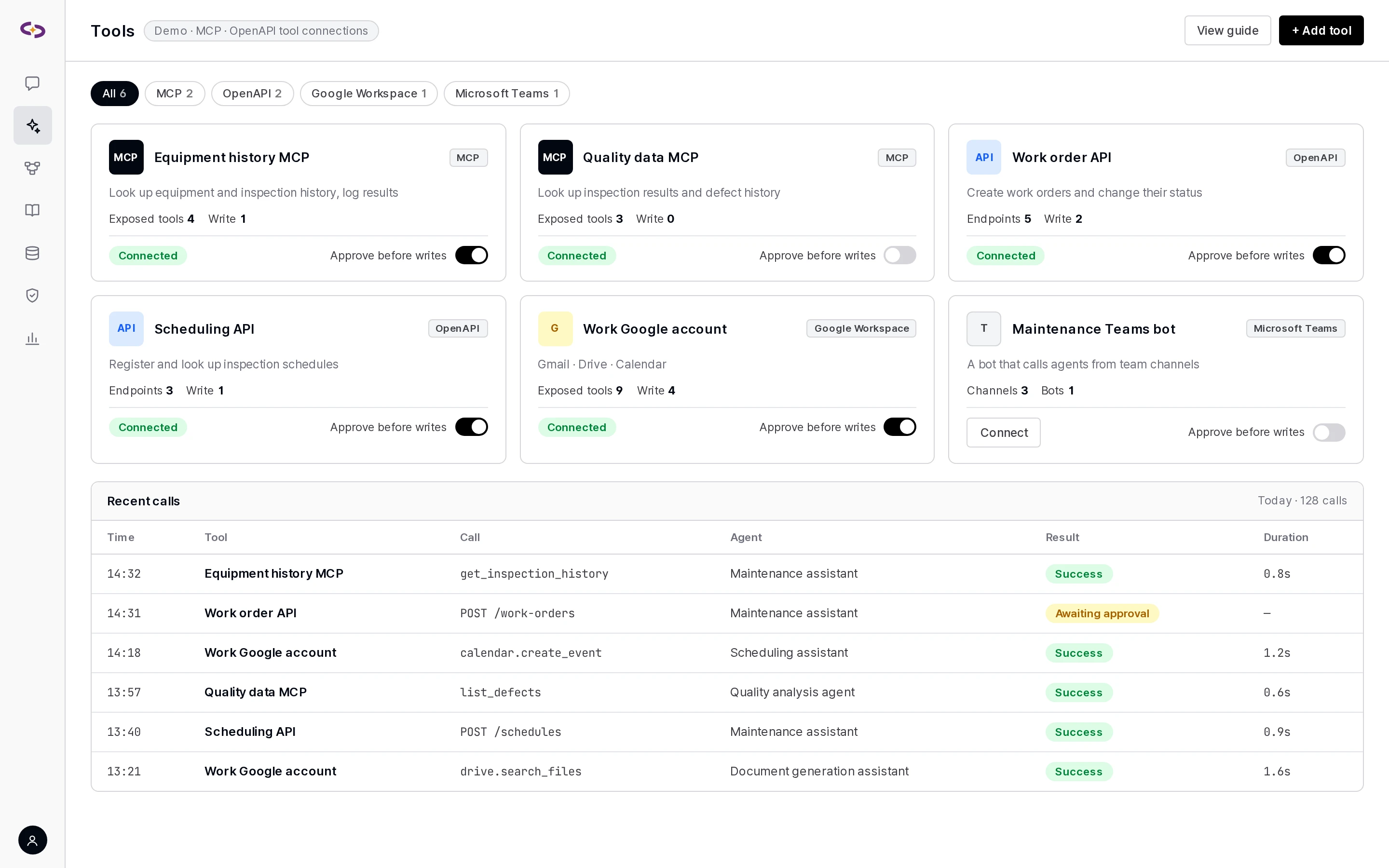
- Work tools Google Workspace · MCP tools
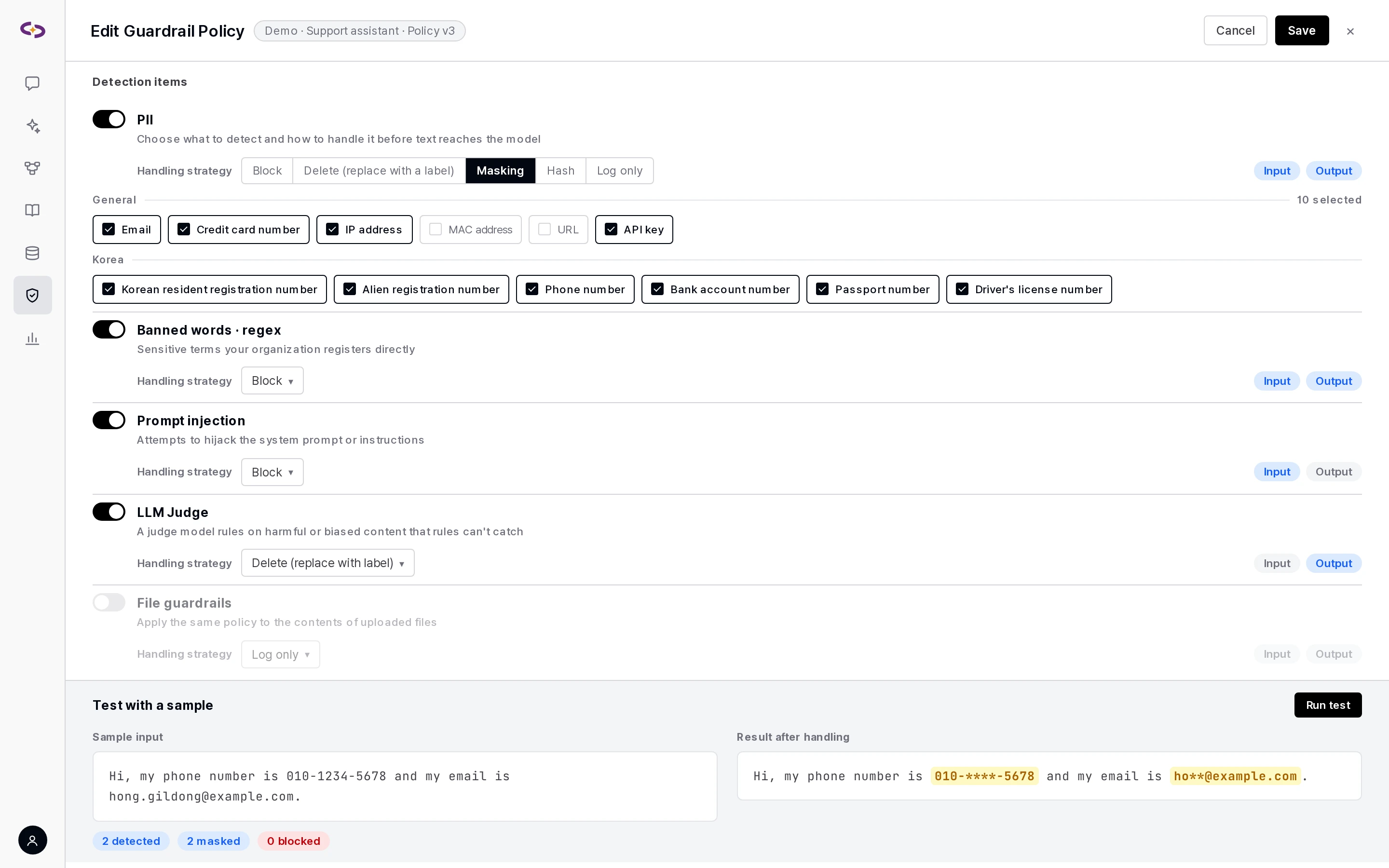
- Sensitive data masking Masked in input and output
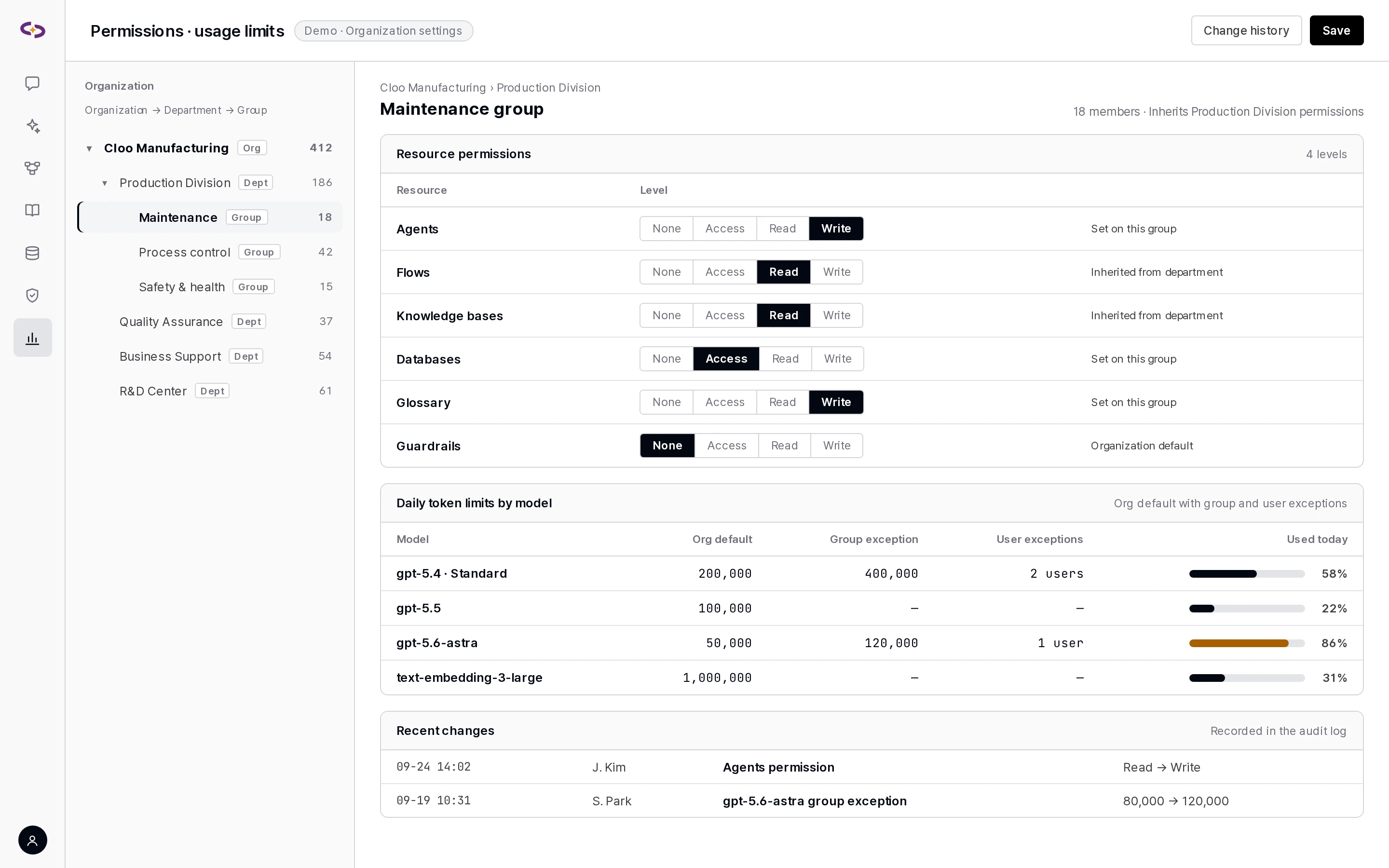
- Permissions · approval Only permitted resources; writes after approval
- Execution records Sources, model calls, and tool runs as traces
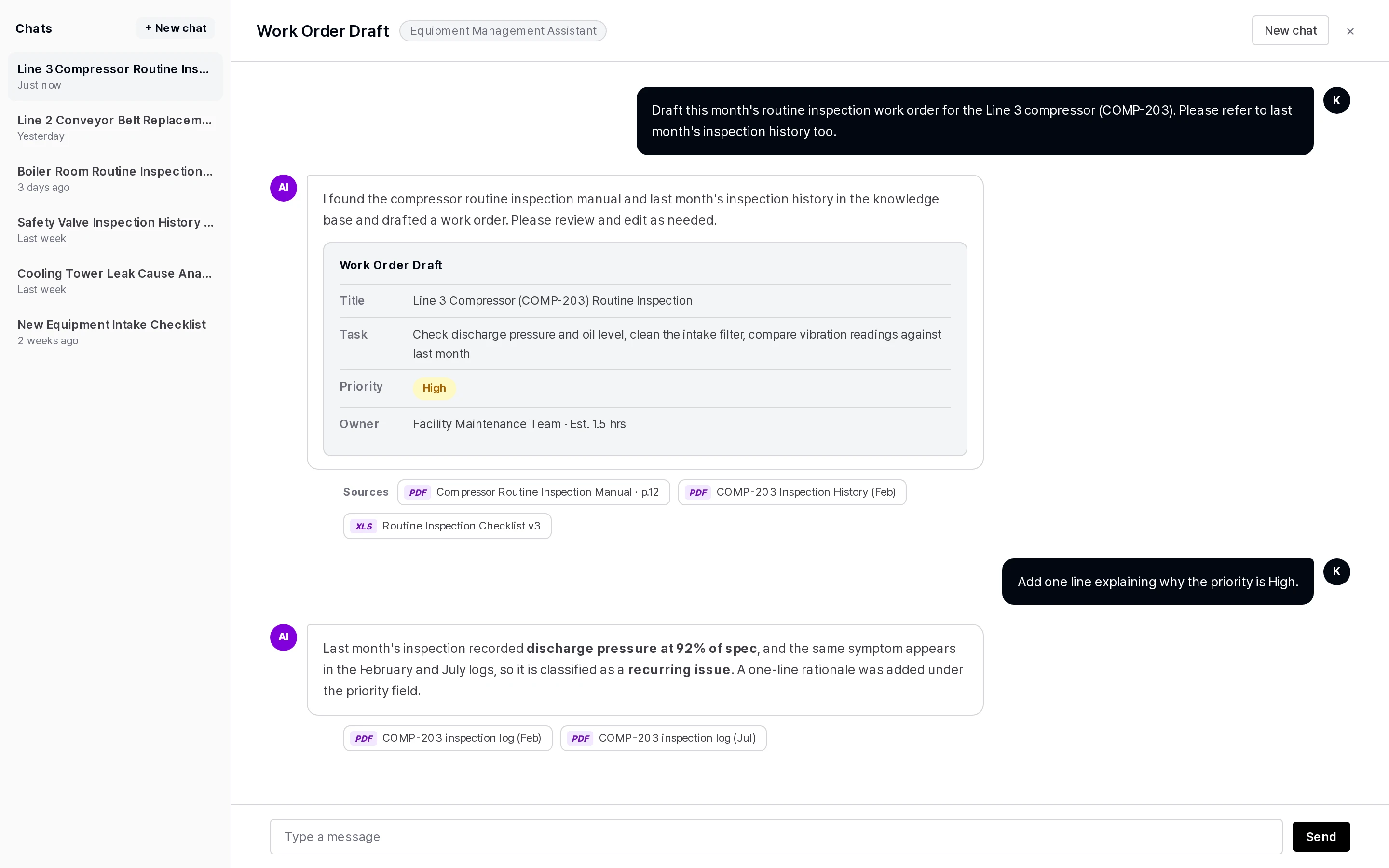
 Draft a work order Maintenance agent Maintenance · Kim ○○K
Draft this month's inspection work order for compressor COMP-203. Use last month's history too.
Here's a draft based on the PDF manual, Excel checklist, equipment DB, and maintenance system.
- Tasks
- Check pressure and oil, clean intake filter
- Priority
- High Pressure at 92% of spec last month
- Owner
- Maintenance · Kim ○○ · 010-****-6666
Registers this draft as a work order in the maintenance system.
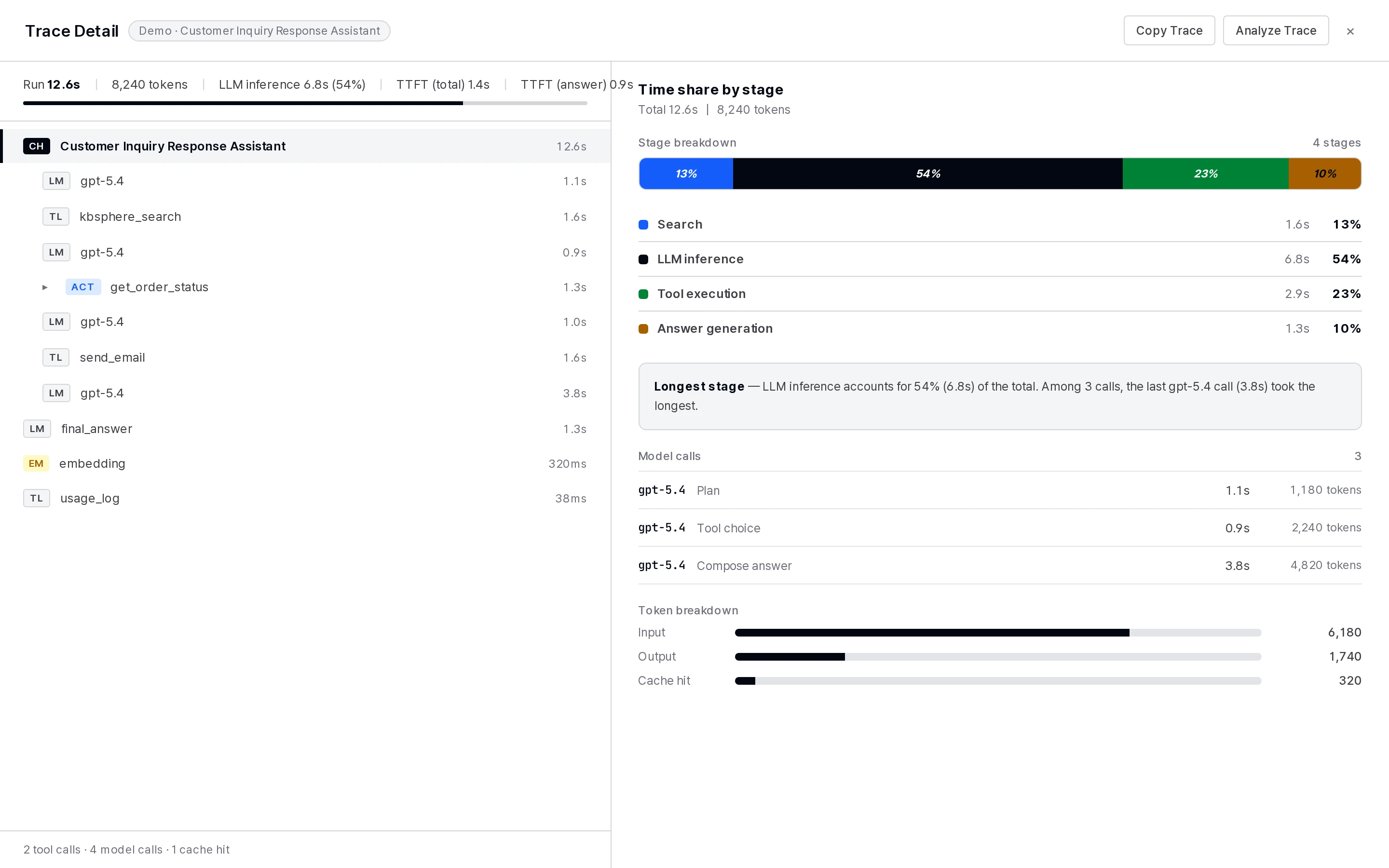
- LM plan 0.92s
- TL kbsphere_search 138ms
- ACT run_sql 1.25s
- TL mcp.cmms 0.62s
- LM final_answer 1.89s
- ACT create_order Pending
Beyond adoption: AI operations you can control and verify
Enterprise AI transformation doesn't stop at adoption.
You need a foundation that connects AI to internal data, verifies its results, and runs it within your organization's policies and permission structure.
You want to connect AI to internal data, but worry about it leaking out
If AI can't use internal documents and data, its answers stay generic, and people have to look for the information again.
Yet handing internal data to outside AI services raises security and data governance concerns.
Use internal data in AI answers without moving it outside
Cloosphere is installed in your cloud environment, and documents, conversations, and logs are managed in your environment.
Connect documents in 14+ formats including HWP, plus 8 database engines, to AI — each answer comes with the documents and SQL it used. LLMs connect directly through accounts your company owns.
It's hard to trace the cause of a wrong response step by step
If you can't tell which step caused a problem — retrieval, SQL execution, or the model's response — it's hard to reproduce and fix.
Trace every step of producing an answer and verify its quality
Every step of producing an answer — model calls, retrieval, SQL execution — is traced.
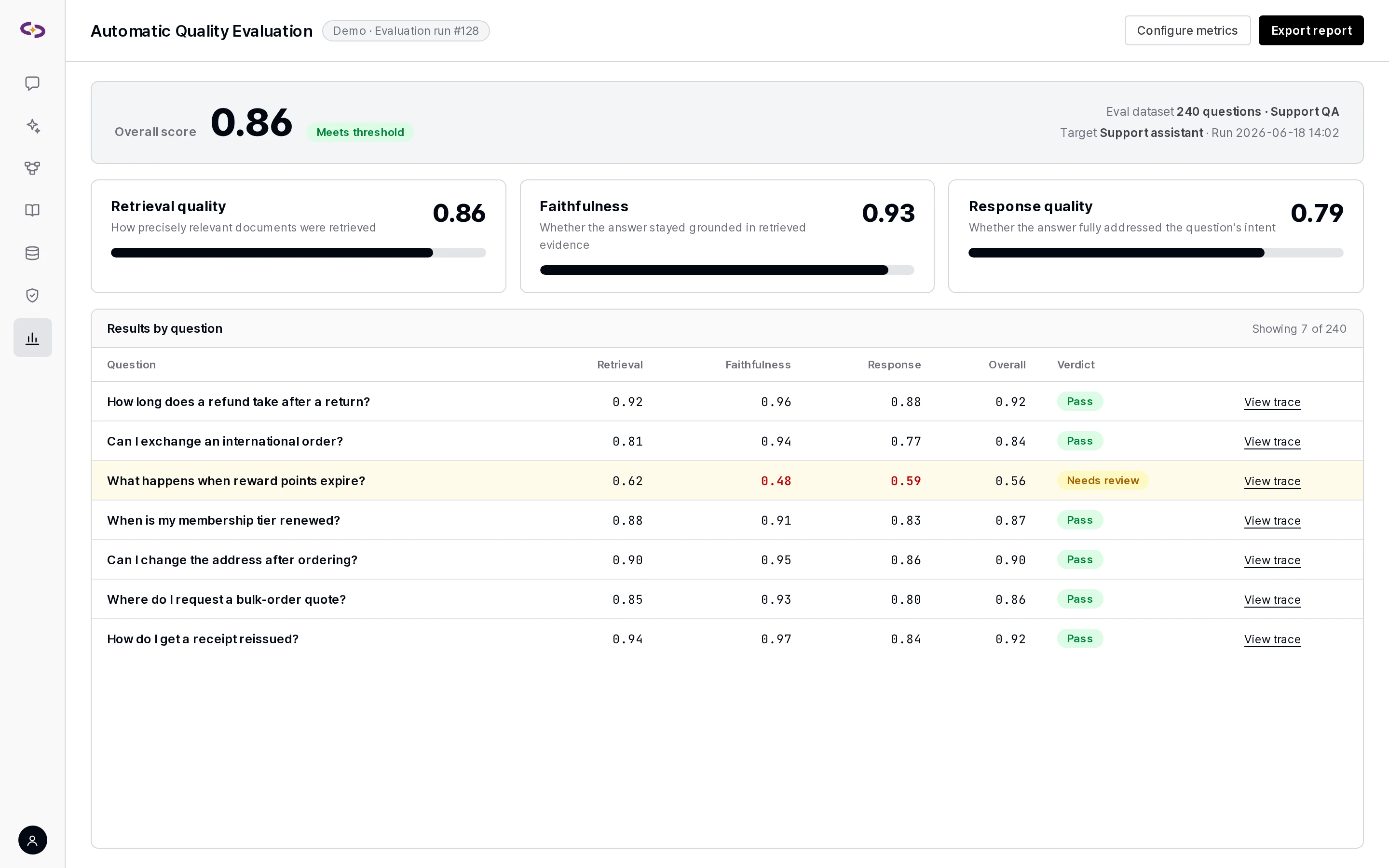
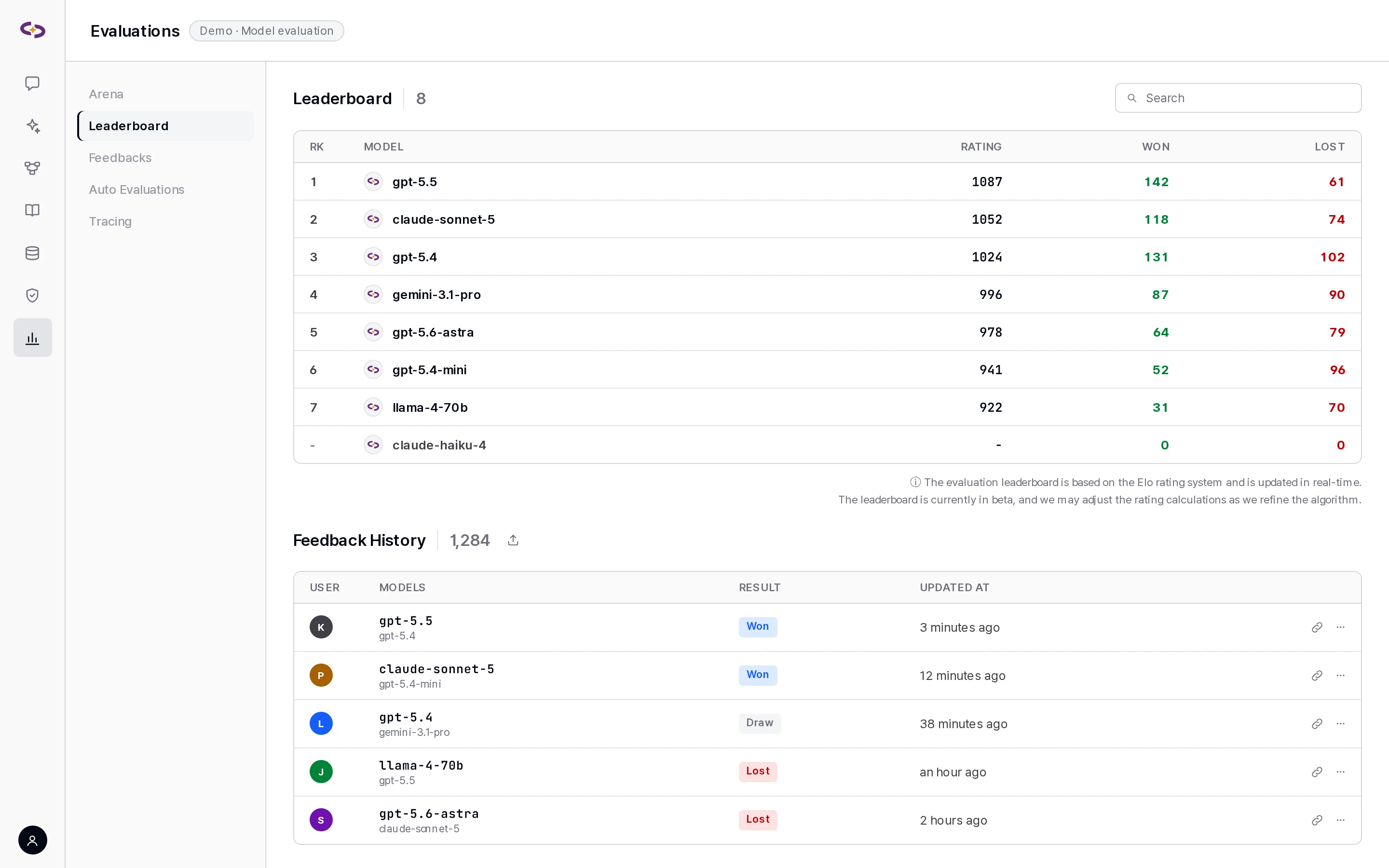
Traces record the input, output, and processing time of each step, and automatic evaluation scores retrieval quality, faithfulness, and response quality, so you can pinpoint where problems occur and keep improving.
It's hard to grow from a pilot to company-wide operation
As more users and departments adopt AI, AI features alone aren't enough to run it reliably.
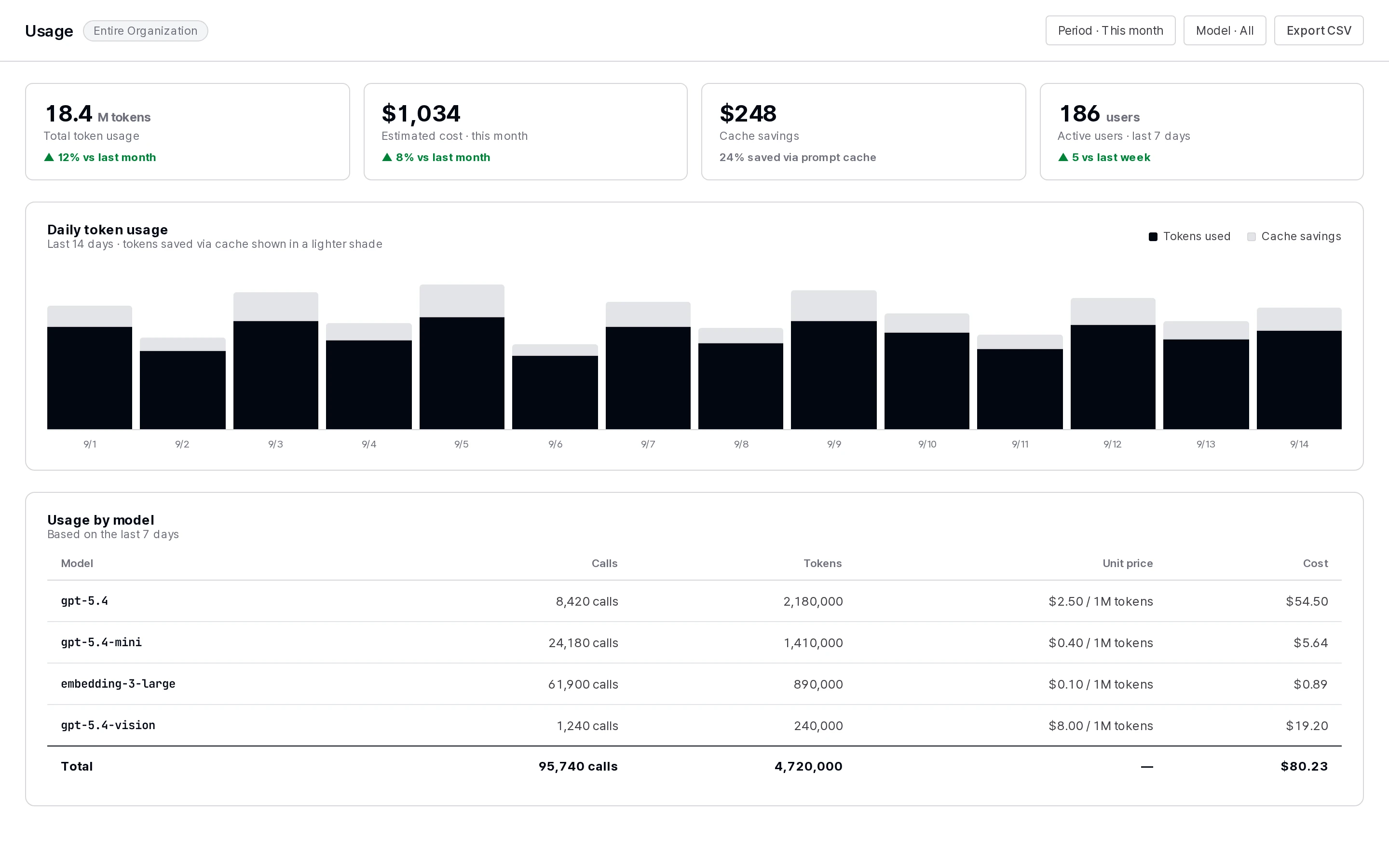
Access permissions, usage, personal data protection, and configuration change history need to be managed consistently at the organization level.
Provide a permission, security, and audit framework for company-wide operation
Permissions follow Organization → Department → Group, and token usage limits are managed per user, group, and organization.
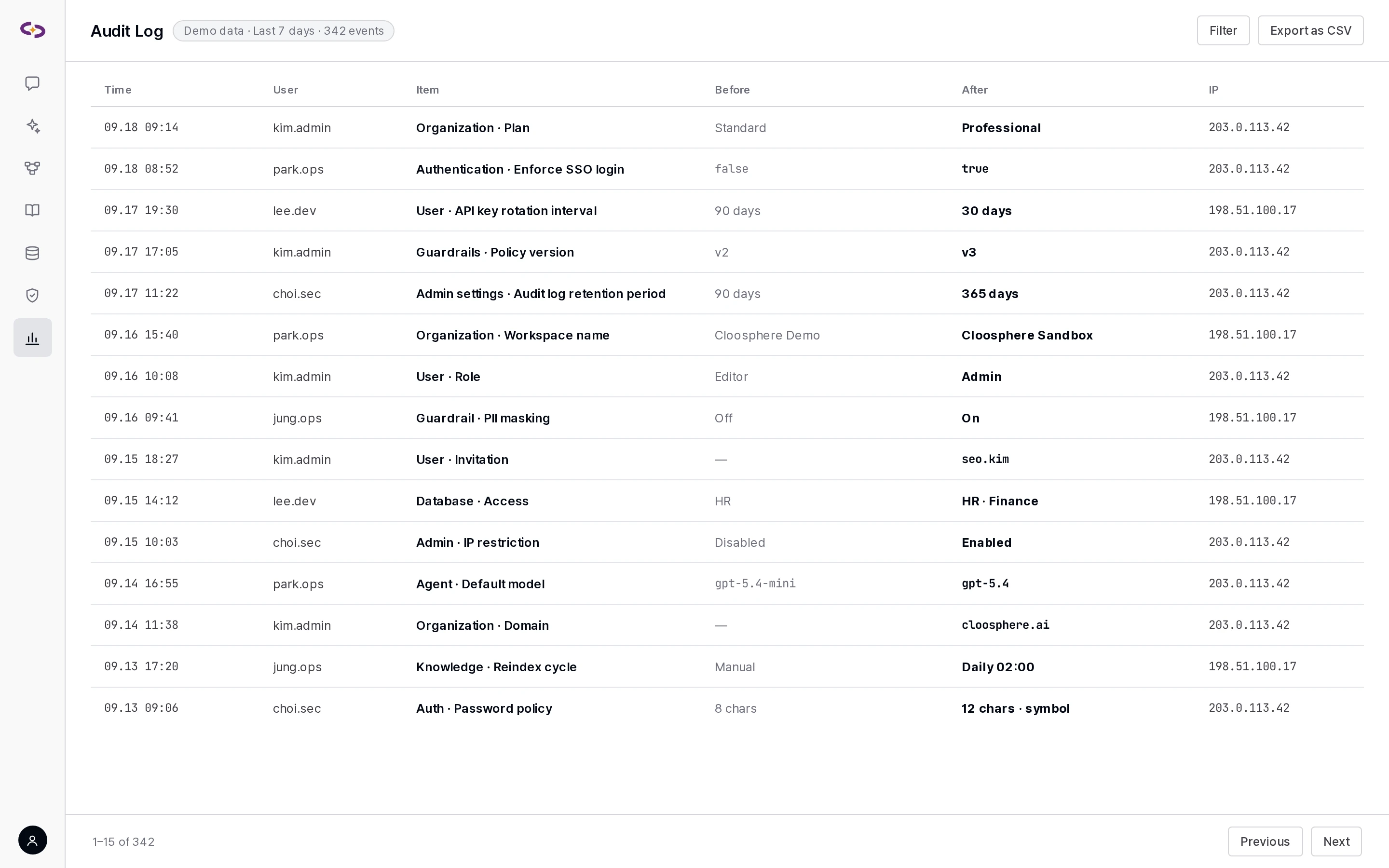
Key configuration change history is recorded in audit logs, and guardrails detect sensitive information, including personal data, and block or mask it per policy.
AI use doesn't stay an experiment for a few users — it grows into an operating environment you can manage across the whole organization.
Connect · Build · Operate — three stages of connecting, building, and running enterprise AI
Connect internal data and business systems, build AI agents that fit the work, and run them within your organization's policies and permission structure.
Connect your company's data and business systems to AI
Build AI agents that fit your organization's workflows and policies
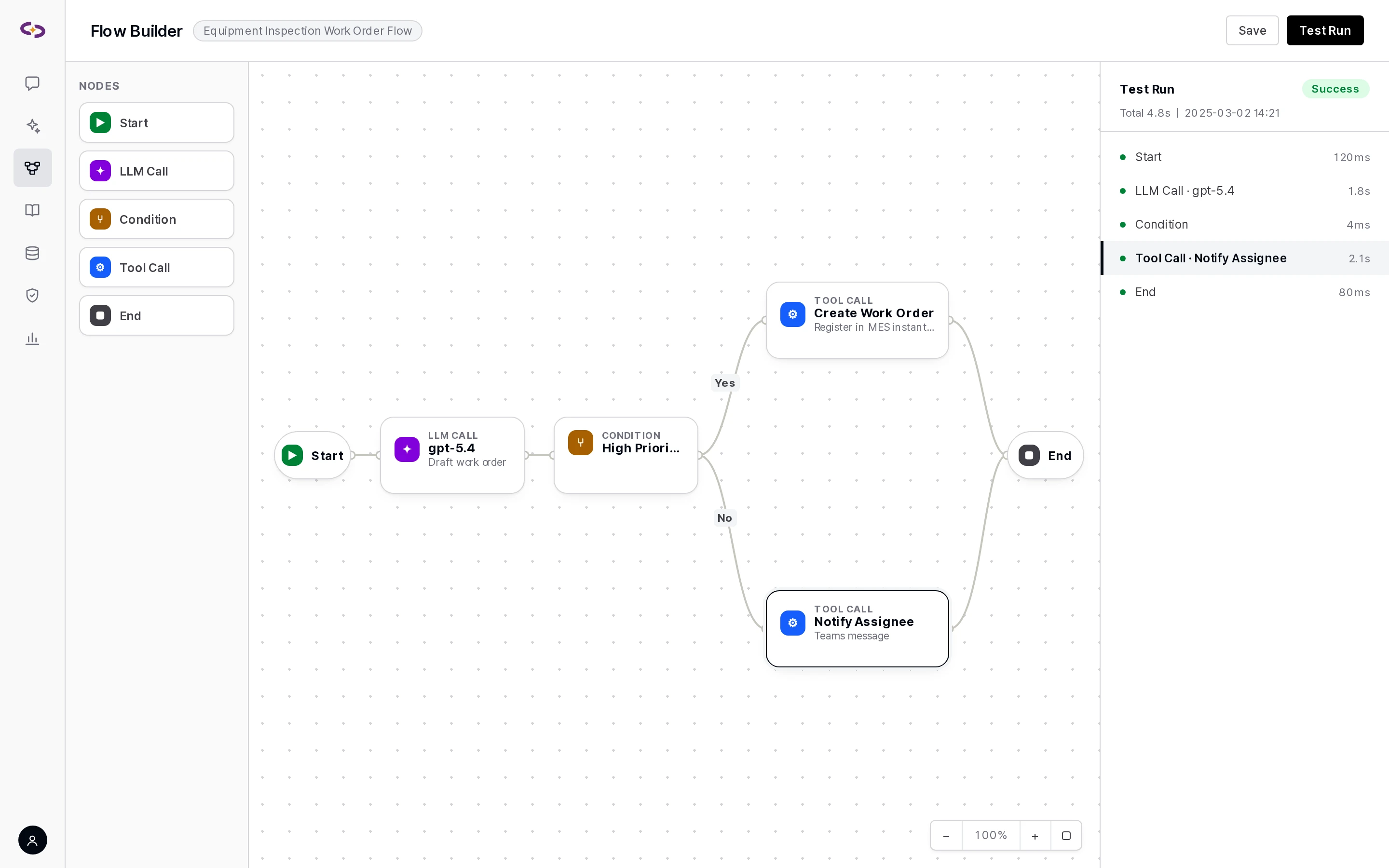
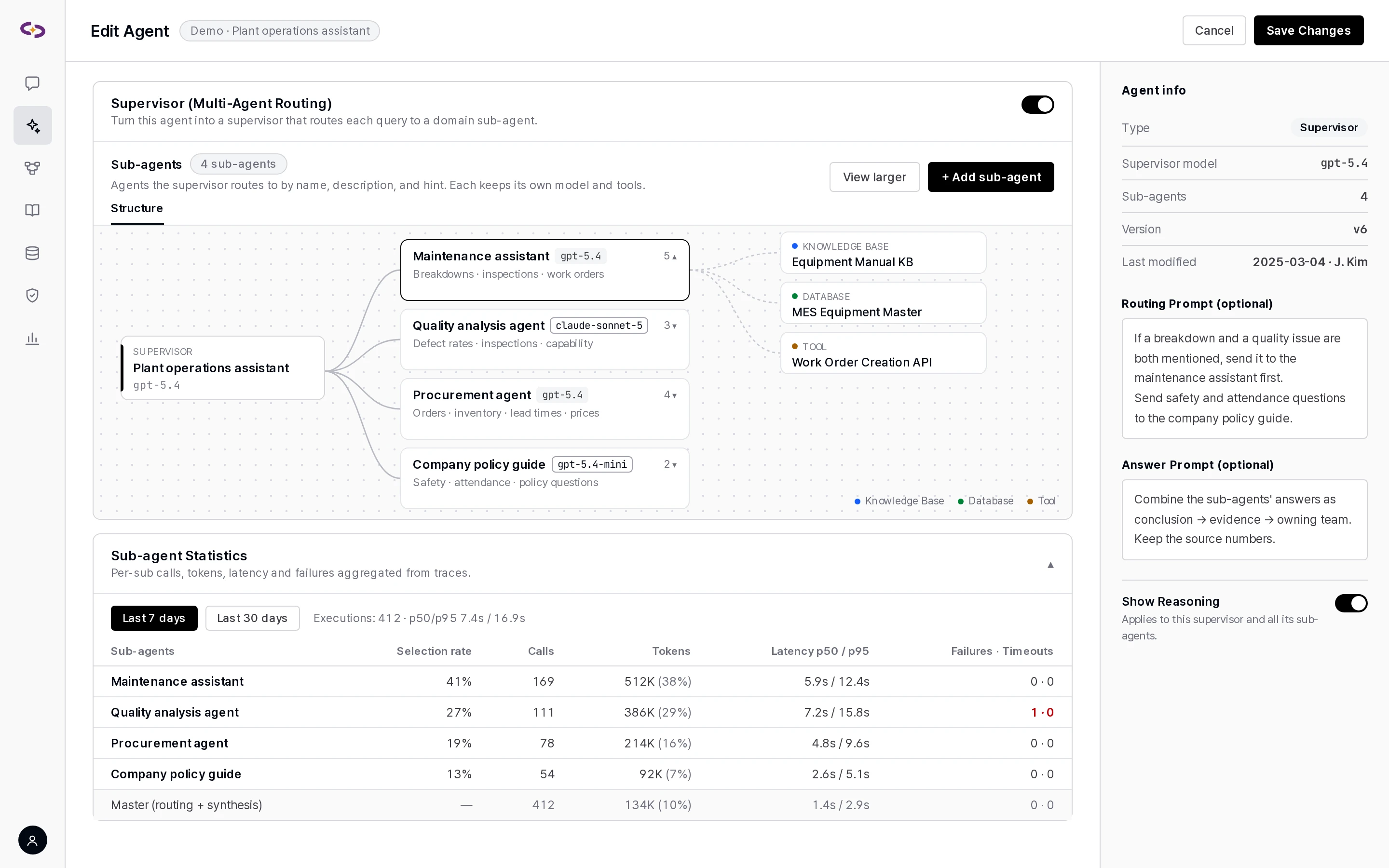
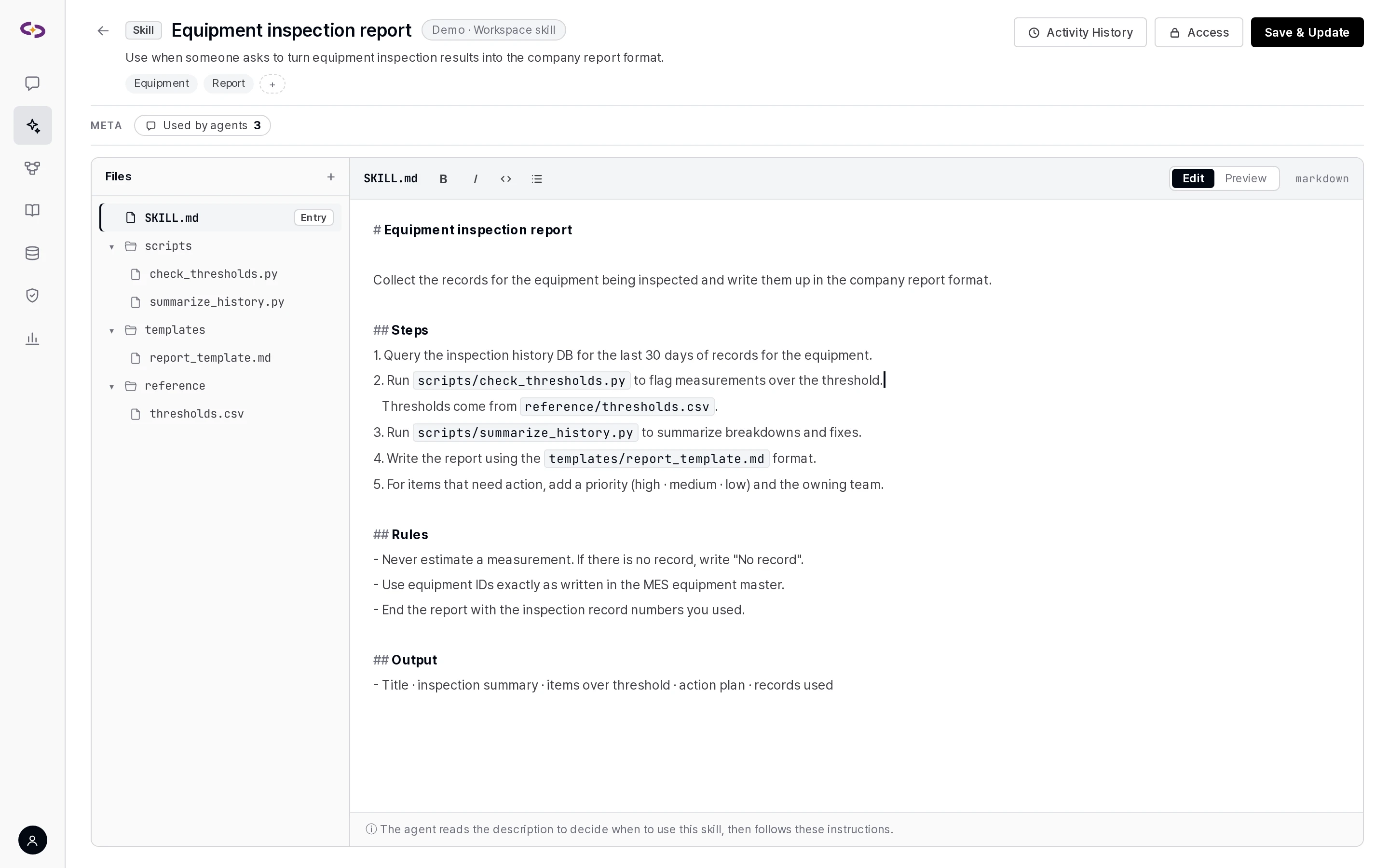
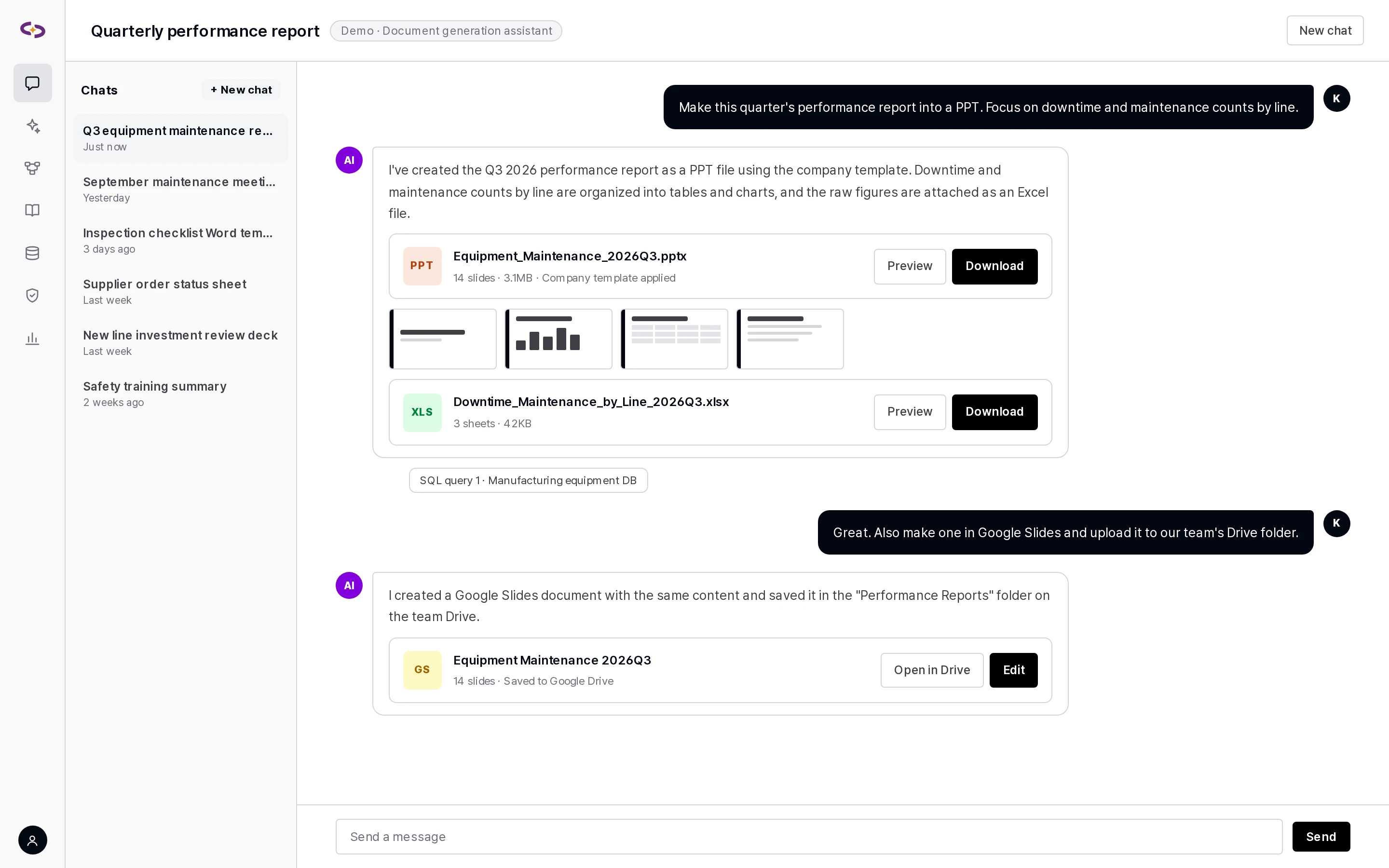
Observe AI agent execution and control it by policy
Observability
Governance
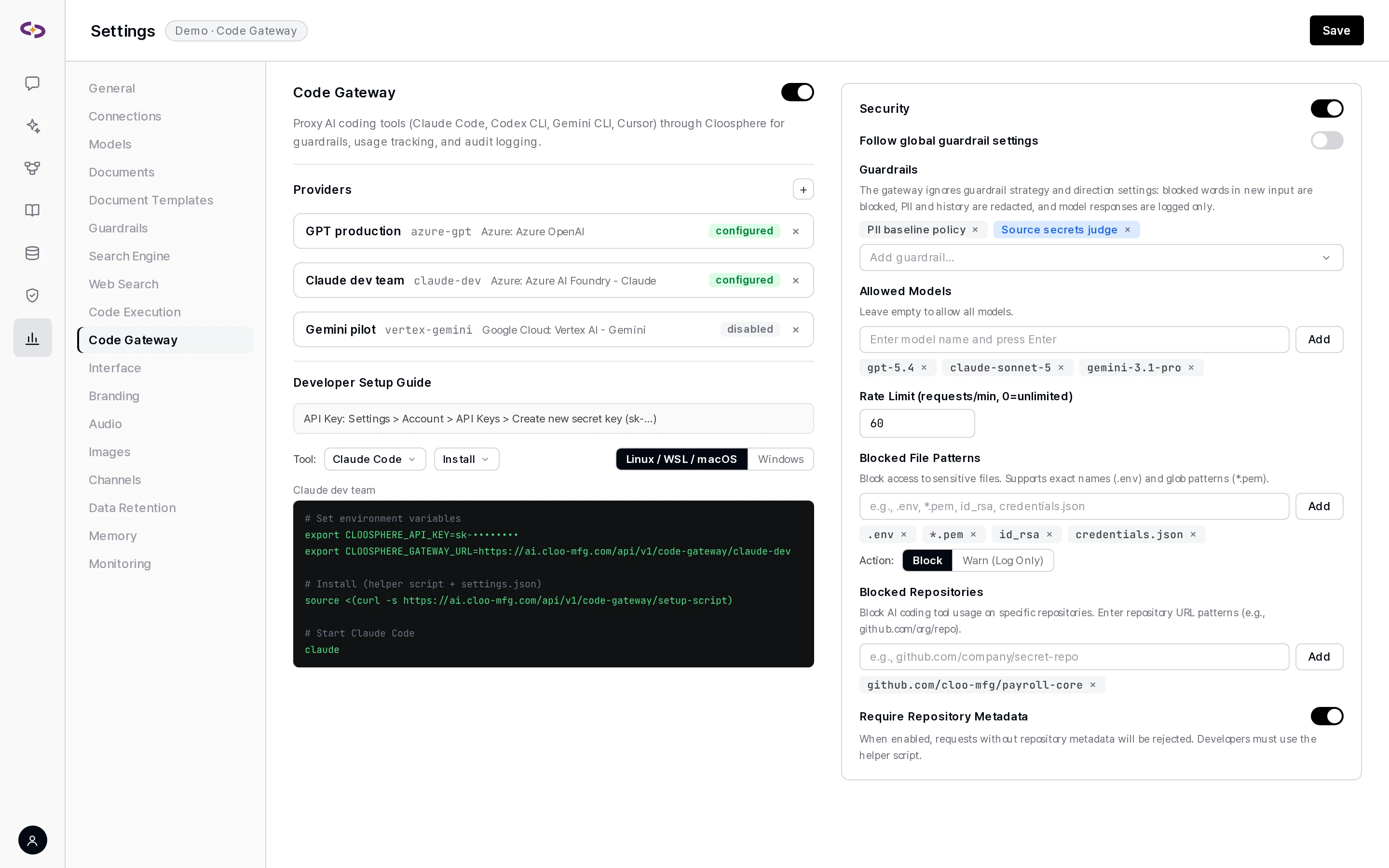
Access controls are available on every tier, audit logs and guardrails from the Standard tier, and the Code Gateway on the Enterprise tier.
More about Evaluation · observability → More about Governance →
Connect the LLMs, databases, and clouds you already use
Cloosphere supports multi-cloud and multi-model environments. Choose the LLMs, databases, and clouds you already use or are newly adopting, and integrate them.
 Azure OpenAI
 Azure AI Foundry Vertex AI Gemini · Claude Ollama Amazon Bedrock OpenAI-compatible Private gateways · vLLM, etc. Azure
 Google Cloud AWS
Support scope and limitations for vector DBs, document formats, extraction and OCR, web search, and each authentication method are listed on the integration specs page. See all integration specs →
All logos and names are trademarks of their respective owners. They are shown only to describe the scope of supported integrations and do not imply any partnership, sponsorship, or endorsement. Full trademark and license notices
Use cases by industry
Configure Cloosphere to fit your organization's work and security requirements — unstructured document search, operational data analysis, report generation, AI coding environment control, and more.
Internal document Q&A
Shipping
Answers from contract, voyage, and regulation documents, and presents the supporting passages.
Knowledge Base · hybrid search · Google Workspace
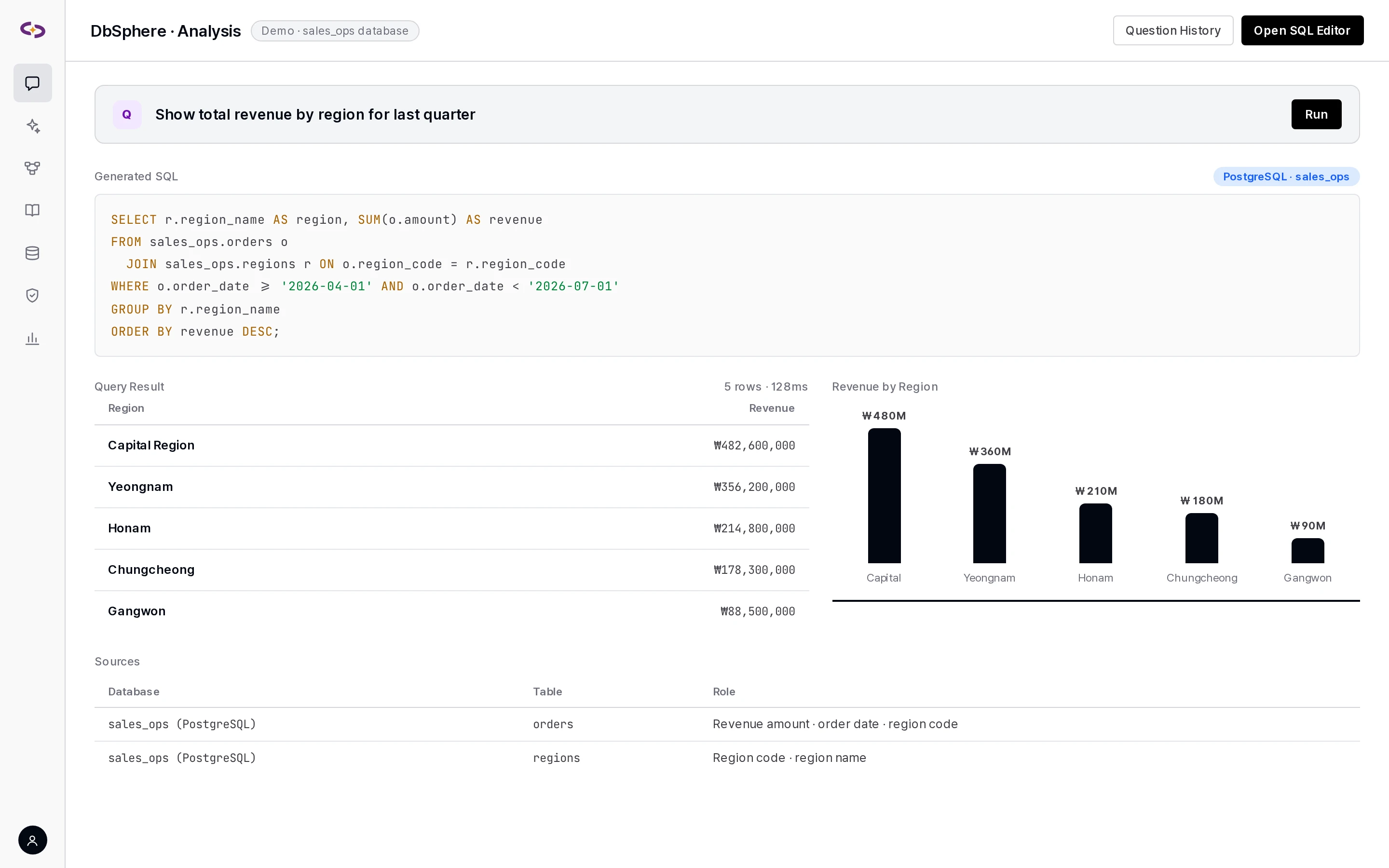
Sales · order data analysis agent
Electronics manufacturing · D2C e-commerce
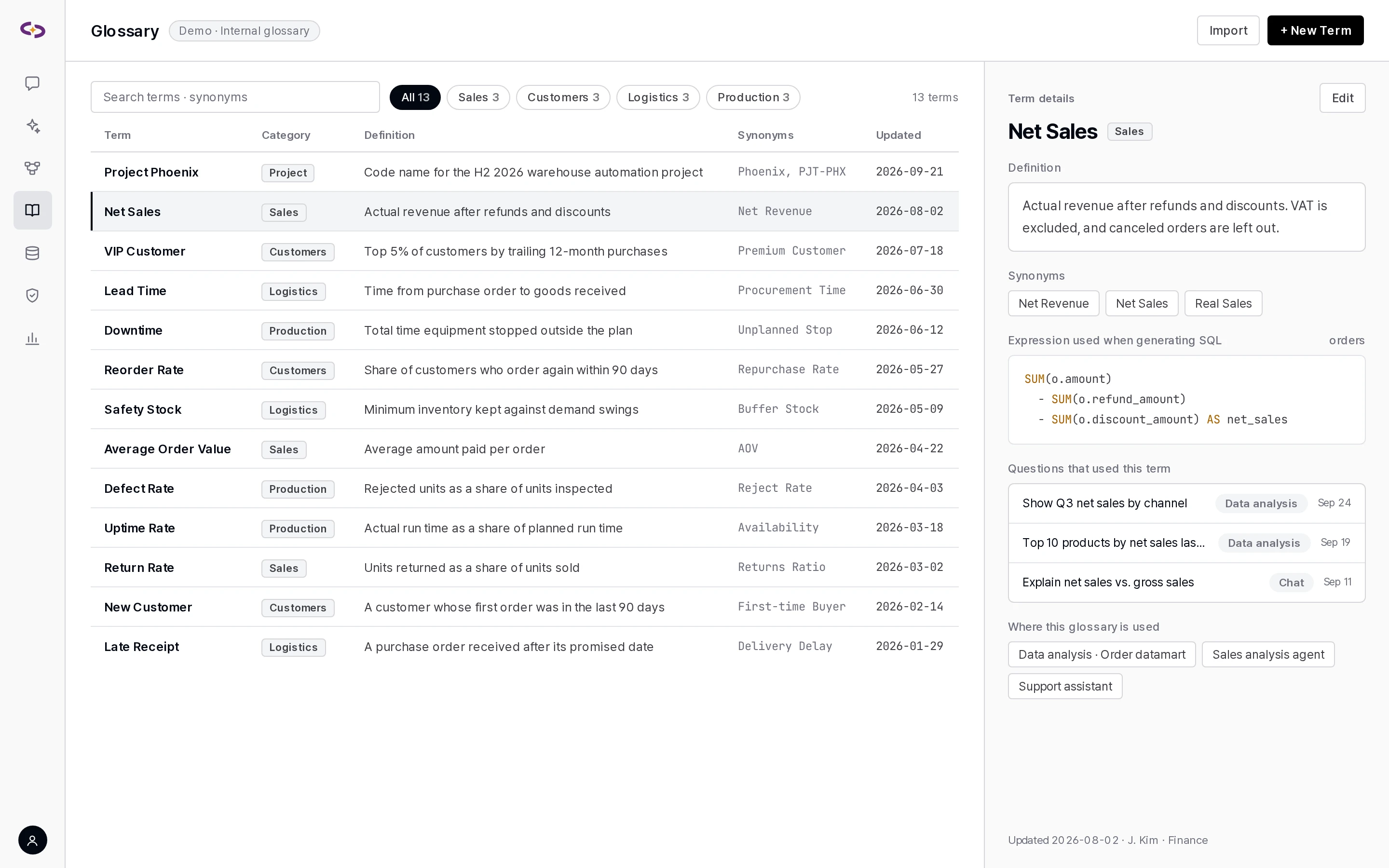
Analyzes sales and order data in plain language and automatically evaluates response quality.
Data analysis · glossary · automatic quality evaluation
Quality · inventory data analysis
Auto parts
Analyzes quality and inventory data in plain language and generates business reports from the results.
Data analysis · MCP tools
AI coding tool control
Gaming
Consolidates the model calls of AI coding tools in Code Gateway to apply guardrail policies and audit logs.
Code Gateway · guardrails · Entra ID
Regular monthly releases continuously improve features and operational stability
Multi-agent supervisor, agent operations monitoring, agent security hardening aligned with OWASP (prompt attack detection, approval for write tools, security status), Azure OpenAI web search support
Multi-agent supervisor, per-model reasoning effort, AWS deployment support, Korean PII detected by default
Only verified question–SQL examples saved automatically, MCP tool exposure mode selection, GPT-6 family support
Workspace activity history, selection rationale for multi-database connections, Code Gateway guardrail redesign, chat stop/reconnect and permission/session hardening
Knowledge Base library, full flow builder redesign, usage visualization and cost estimation, Google Docs/Sheets/Slides creation and editing, workspace skills
Common questions before adopting Cloosphere
How does pricing work?
Contracts consist of an initial implementation and annual operations. Platform fees are not based on conversations, token usage, or seats. See the pricing page for the features included in each of the 4 tiers (Basic · Standard · Professional · Enterprise). The final price is quoted individually based on implementation scope and operating conditions. LLM usage is billed directly to your own account.
Who sets up the LLM account?
You connect your own Azure OpenAI, Vertex AI, or other account. If you don't have one, Cloocus can help open and run it as an MSP.
Where is data stored?
Conversations, documents, and logs are stored in your environment where Cloosphere is installed and are never sent to servers operated by Cloocus. Questions and documents are sent to the LLM, embedding model, and document extraction engine you connect, only as far as needed to generate answers. If you use web search, information needed to process the search may be sent to the search provider. On the Enterprise tier, credentials and secrets can be protected with Azure Key Vault envelope encryption (KMS).
Does it work in an air-gapped network?
Air-gapped environments are supported subject to a prior technical review. The signed license file is verified inside your environment, and the LLM can be configured to use an internally deployed model or an approved private endpoint. Features with external dependencies, such as web search, external tools, and extraction APIs, are turned off or replaced with internal systems based on the pre-install check.
How long does deployment take?
Implementation time depends on air-gap requirements and the scope of SSO, database, and existing-system integration. We estimate the timeline per project once requirements and implementation scope are confirmed, and share an expected timeline in a demo or an initial meeting.
We'll demo it on an environment that mirrors yours
We set up a demo environment based on your deployment method, integration scope, and governance requirements.